At some point in every developer’s journey, there comes a moment where you stop experimenting and start committing. For me, that commitment was JavaScript.
I Explored Other Languages First
Like most developers, I didn’t start with JavaScript. I experimented with multiple languages, each teaching me something valuable.
I wrote scripts in Python, built rigid structures in Java, and managed memory in C++. But over time, one language consistently felt more practical and aligned with how I wanted to build things.
JavaScript Is Everywhere
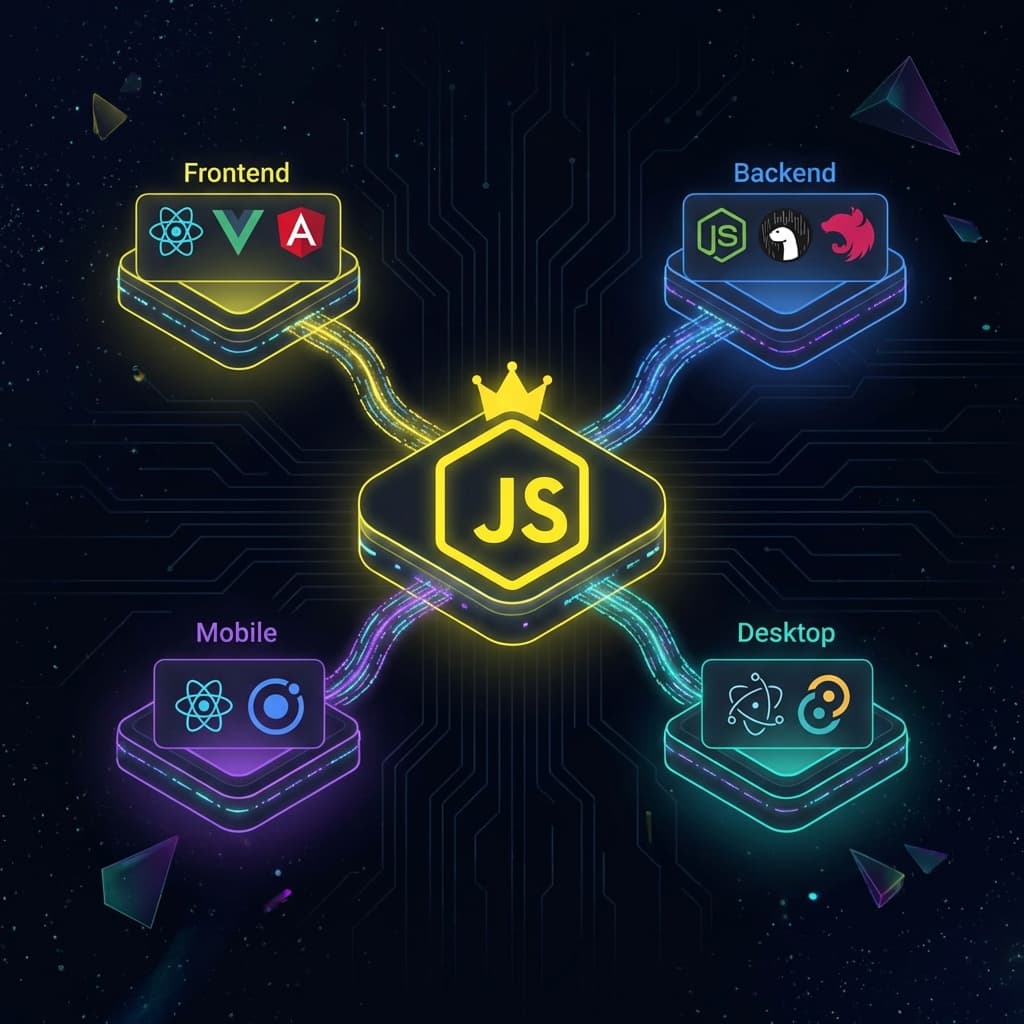
JavaScript isn’t just a language - it’s an ecosystem. From frontend (React, Vue) to backend (Node.js, NestJS), from mobile (React Native) to desktop (Electron), JavaScript allows me to build complete products without switching mental contexts.
I realized I could build an entire startup with one language. That leveraged time and effort in a way nothing else did.
Faster Feedback, Faster Learning

JavaScript gives immediate feedback. You write code, refresh the browser (or let HMR do it), and see results instantly.
This tight feedback loop helped me learn faster and stay motivated. Unlike compiled languages where you wait to see if things broke, JS encourages a "try, fail, fix" cycle that accelerates growth.
Massive Community and Ecosystem

With JavaScript, you’re never alone. Whatever problem you face, someone has likely solved it - and shared it on npm or GitHub.
The sheer volume of open-source libraries, tutorials, and discussions means you spend less time reinventing the wheel and more time solving unique problems.
Career Opportunities and Market Demand
JavaScript skills open doors. From startups to large companies, the demand for JavaScript developers is constant and global.
Whether it's full-stack roles or specialized frontend/backend positions, the market rewards JS proficiency heavily. It’s a safe bet for a long-term career.
It’s Not Perfect (And That’s Okay)
JavaScript has its flaws - quirky behavior, ever-changing tools, and "undefined is not a function."
But the benefits far outweigh the frustrations. The flexibility it offers matches how I approach problem-solving: start simple and scale complexity when needed.
Conclusion
I didn’t choose JavaScript because it’s trendy. I chose it because it enables me to build, learn, and ship faster.
For my goals as a developer, JavaScript simply made the most sense.