Technology doesn’t just evolve.
Roles evolve with it.
If you zoom out and look at the last 50 years of tech, you’ll see a clear pattern:
Every new technological layer creates new roles. Every abstraction shifts value upward. And engineers who adapt to the new layer win.
Let’s walk through it.
1️⃣ The Hardware Era (1960s-1980s)
Computers were expensive, rare, and complex.
Dominant Roles:
- Hardware Engineer
- Computer Scientist
- Systems Programmer
What Engineers Did:
- Write assembly
- Manage memory manually
- Build operating systems
- Create compilers
- Design database engines from scratch
Value was in: Understanding how machines work at the lowest level.
This was raw computing.
2️⃣ The Internet Era (1990s)
The web changed everything.
Computers stopped being isolated machines. They became connected.
New Roles Emerged:
- Web Developer
- Network Engineer
- Database Administrator
- Backend Engineer
What Changed:
- HTML, CSS, JavaScript became mainstream
- PHP, Java, MySQL powered websites
- Apache and early servers dominated
The value shifted from: “How computers work” to “How to build applications for users.”
The software industry exploded.
3️⃣ The Platform & Cloud Era (2005-2015)
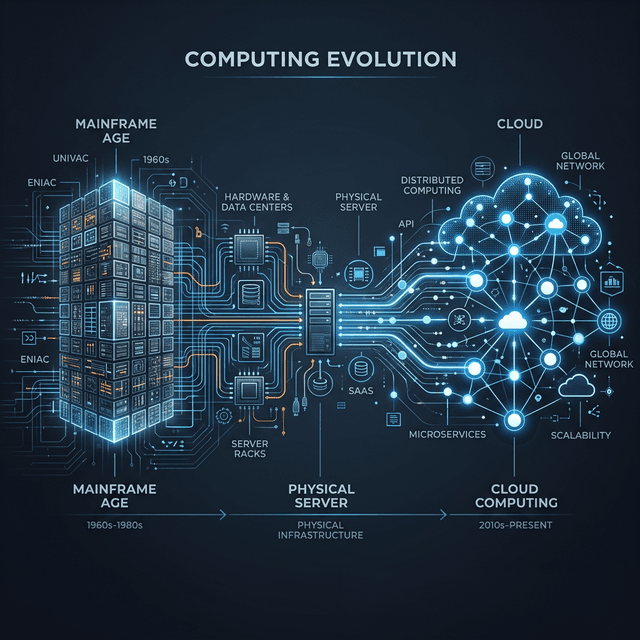
Then came:
- AWS
- Smartphones
- Docker
- Kubernetes
Infrastructure became abstracted.
New Roles:
- Cloud Engineer
- DevOps Engineer
- Mobile Developer
- Data Engineer
What changed: You no longer racked servers manually. You provisioned infrastructure with code.
Distributed systems became normal.
Backend engineering evolved from: “Build API” to “Design scalable, distributed systems.”
4️⃣ The Data & ML Era (2015-2022)
Data became strategic.
Deep learning matured.
New Roles:
- Data Scientist
- Machine Learning Engineer
- AI Researcher
Companies started using:
- Recommendation systems
- Predictive analytics
- NLP models
AI was powerful - but still specialized.
Most engineers weren’t directly interacting with it.
5️⃣ The AI Integration Era (2023-Now)
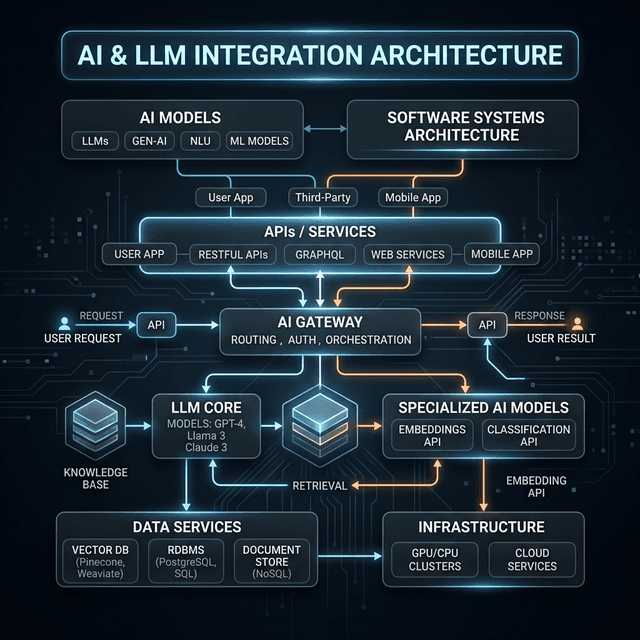
This is the shift happening right now.
AI is no longer:
- A research lab thing
- A separate department
It is becoming a product layer.
Emerging Roles:
- LLM Engineer
- AI Application Engineer
- AI Infrastructure Engineer
- AI Systems Architect
Backend engineers now work with:
- LLM orchestration
- RAG systems
- Vector databases
- AI-driven workflows
- Model routing and cost optimization
The backend role didn’t disappear.
It expanded.
The Pattern Across All Eras
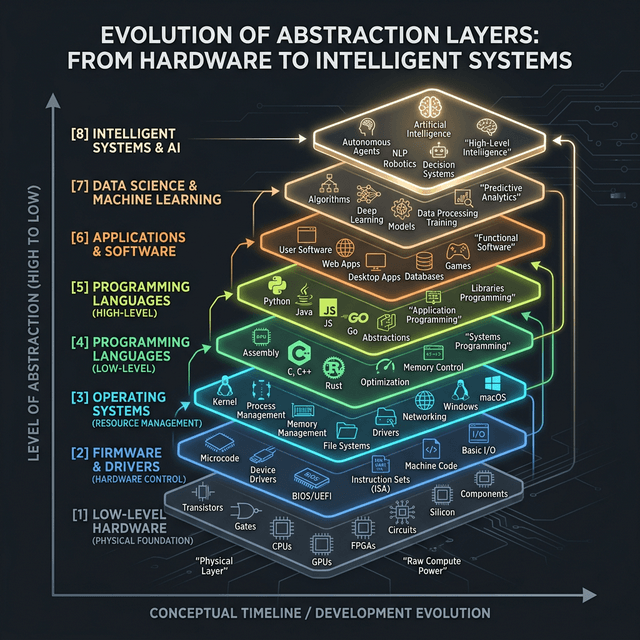
Here’s the recurring cycle:
- New technological layer appears.
- Abstraction increases.
- Low-level work becomes automated.
- New higher-level roles emerge.
- Engineers who adapt thrive.
Examples:
- Manual server setup → Cloud automation
- Static HTML → Frameworks
- On-prem infrastructure → DevOps
- Manual coding → AI-assisted development
Each wave didn’t eliminate engineers.
It changed what engineers needed to understand.
What Usually Disappears?
Not engineering.
But repetitive, low-leverage work.
Boilerplate coding. Manual provisioning. Basic CRUD systems. Low-level configuration.
Automation replaces repetition.
Strategy replaces repetition.
Where We Are Now
We are entering a phase where:
AI becomes part of the software stack.
Just like:
- Databases became standard.
- APIs became standard.
- Cloud became standard.
Understanding AI systems will likely become:
A normal expectation for backend engineers.
Not optional. Not niche. Standard.
The Real Evolution
The evolution of tech roles is not about replacement.
It’s about elevation.
Every wave pushes engineers upward:
- From hardware to applications
- From applications to distributed systems
- From distributed systems to intelligent systems
The core skill that survives every era:
System thinking.
Not just writing code. But understanding how layers fit together.
Final Reflection
Looking at the last 50 years:
Technology keeps changing.
But engineers who:
- Learn the new layer
- Understand the abstractions
- Adapt their skillset
Remain relevant.
The tools evolve. The layers change. The thinking matters.
And that pattern is unlikely to stop.