Slack has quietly become the place where real work happens. Customer questions, internal requests, on-call incidents, partner discussions - all of it lives inside chat threads.
But there’s a problem that only becomes obvious at scale:
Conversation is not the same thing as ownership.
This blog is about why Slack-first support systems are deceptively hard to build, what breaks in real teams, and the kind of backend thinking required to make them reliable.
Slack Is Great at Conversation - Not at Responsibility
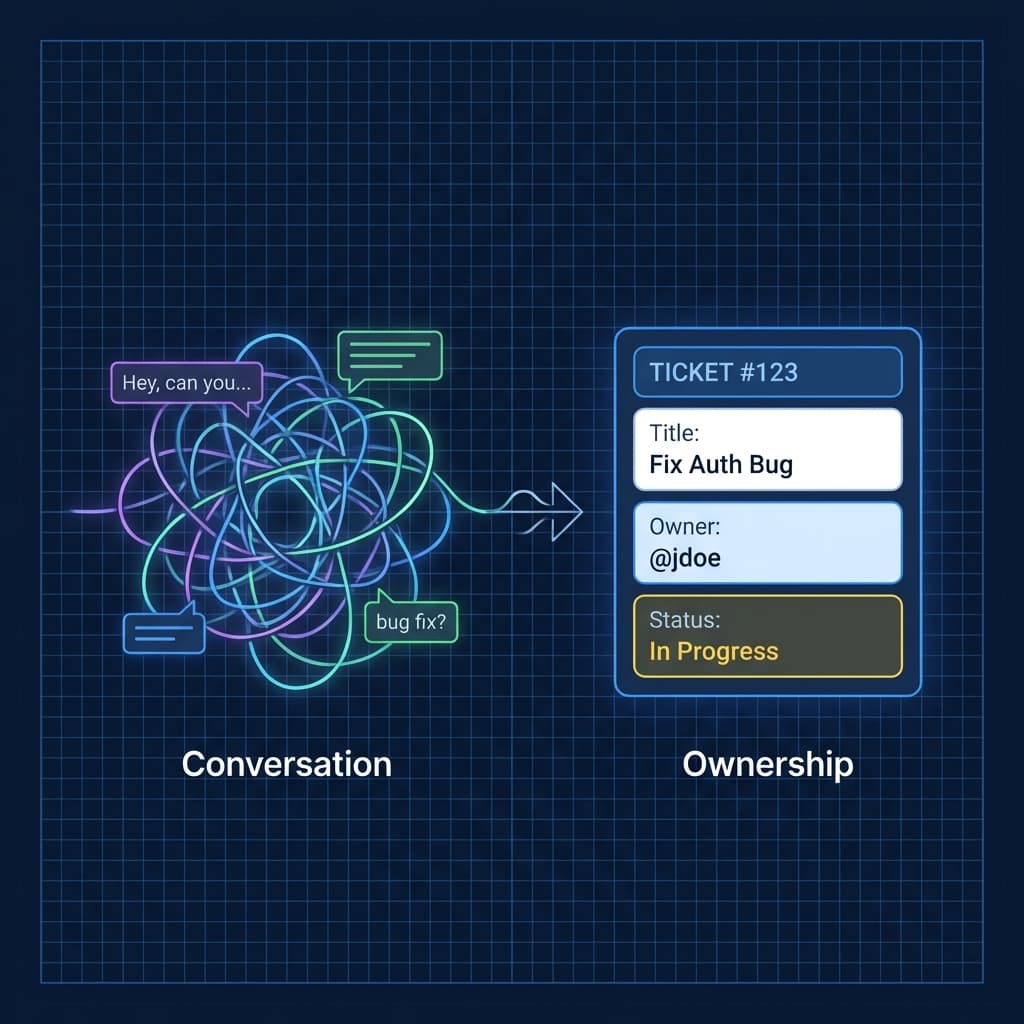
Slack excels at:
- Fast communication
- Rich context
- Low friction collaboration
What Slack intentionally avoids is opinionated workflow.
Slack does not answer:
- Who owns this request?
- Has someone accepted responsibility?
- Are we late responding?
- Did we silently drop the ball?
This isn’t a flaw - it’s a design choice. Slack optimizes for conversation, not accountability.
But as teams scale, this gap becomes painful.
Important requests don’t fail loudly. They fail quietly - buried in threads, waiting for “someone” to respond.
Why Slack Alone Can’t Solve This
It’s tempting to think:
“Why can’t Slack just add better tracking?”
Because the moment Slack enforces ownership and time-bound commitments, it stops being Slack.
Slack avoids:
- Strong state
- Mandatory ownership
- Enforced deadlines
And that’s exactly why systems built on top of Slack must compensate for these missing guarantees.
Slack should remain the surface. The backend must become the source of truth.
Intent vs Commitment: Requests and Tickets
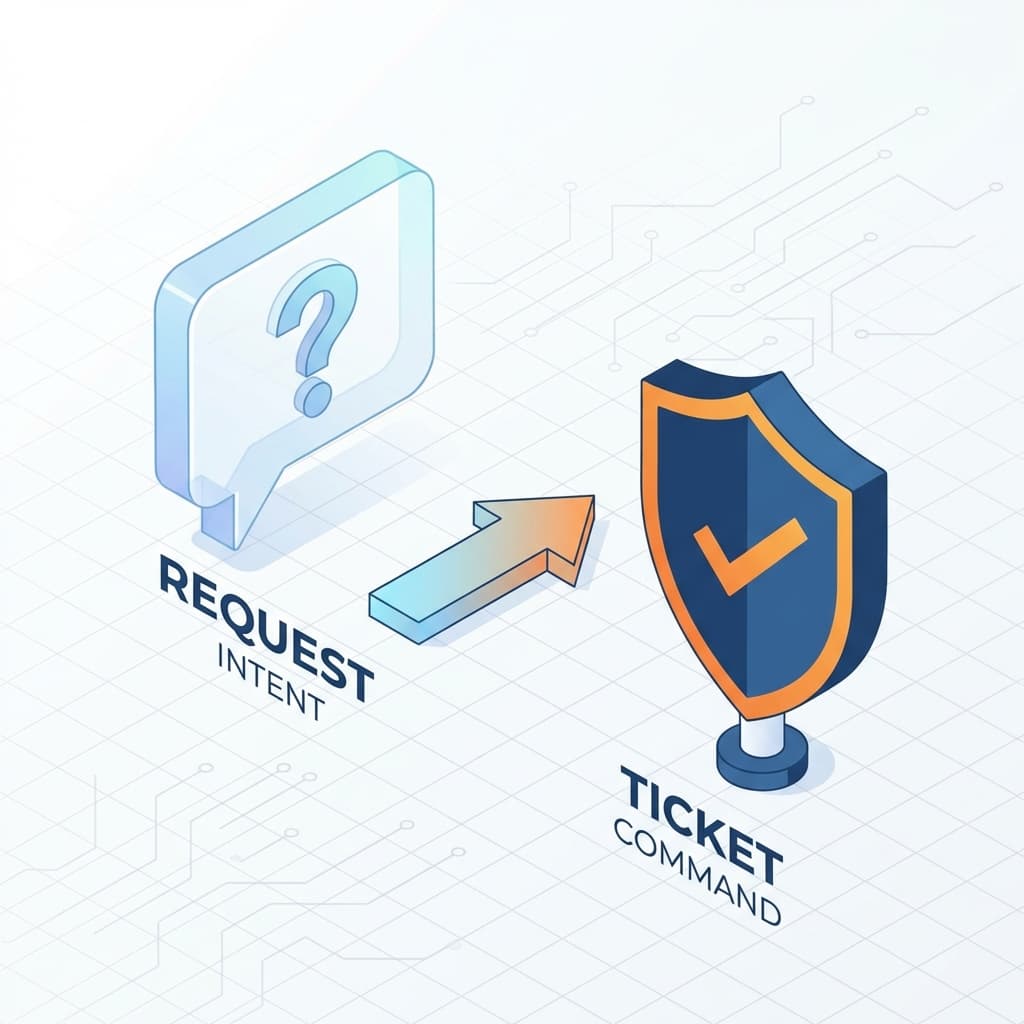
One of the most important distinctions in support systems is the difference between asking and owning.
- A request represents intent: someone is asking for help
- A ticket represents commitment: someone has accepted responsibility
These are not the same thing.
Treating every message as “work” leads to confusion. Treating acceptance as a first-class transition creates clarity.
The moment an agent accepts a request:
- Ownership becomes explicit
- Responsibility is assigned
- The system can make guarantees
This transition matters more than the message itself.
Ownership Must Be Explicit
In many teams, ownership is implicit:
- “I think you’re handling it”
- “I replied, so it’s covered”
- “Someone will follow up”
These assumptions break under pressure.
Explicit ownership changes behavior:
- Someone is accountable
- Work doesn’t float indefinitely
- Escalations become possible
Slack conversations alone can’t enforce this. Backend systems must.
SLA Is About Responsibility, Not Time
A common mistake in chat-based systems is treating SLA as:
“Time since the message arrived”
In reality, SLA is closer to:
“Time during which the team owed a response or action.”
That distinction matters.
Consider:
- Waiting on the customer
- Blocked by another team
- Actively being worked on
In these states, time should not count the same way.
This is why robust SLA systems:
- Pause when responsibility shifts away
- Resume when action is expected
- Are derived from timestamps, not timers
Timers drift. Processes restart. Cron jobs run late.
Timestamp-based derivation survives all of that.
Time, Silence, and Backend Truth
One of the hardest things to model in chat systems is silence.
Silence often means:
- A request was forgotten
- Ownership was unclear
- Work stalled without visibility
Humans are bad at noticing silence. Backend systems are not.
By treating time and inactivity as signals, systems can:
- Detect neglected requests
- Surface risk early
- Restore trust with customers
This requires backend logic that continuously evaluates state - not just reacts to events.
Concurrency and Failure Are Not Edge Cases
In real systems:
- Two agents can accept at the same time
- External systems retry events
- Partial failures are normal
Correctness cannot depend on timing or UI assumptions.
It must come from:
- Database constraints
- Transactions
- Idempotent operations
Letting the database enforce reality is not an implementation detail - it’s a design principle.
Slack as an Adapter, Not the Brain
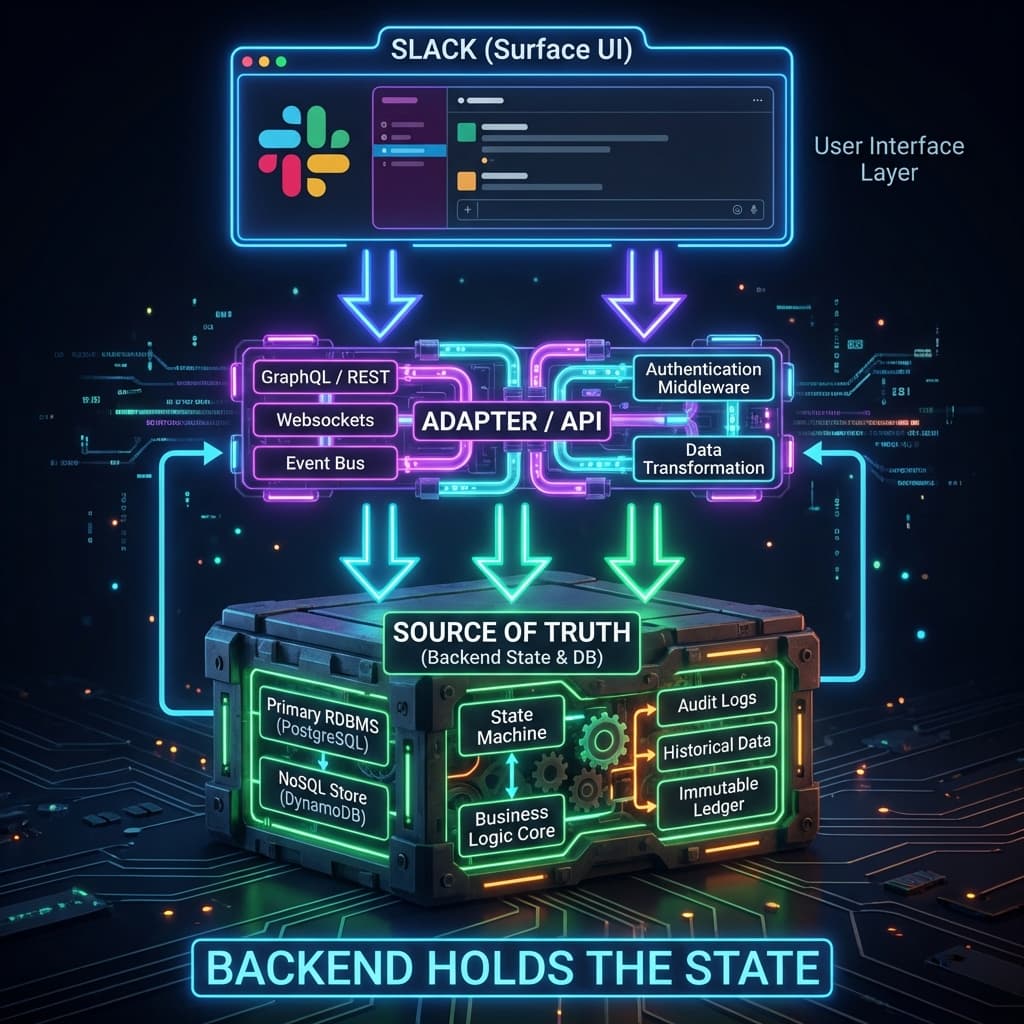
Slack should be treated as:
- An entry point
- A notification surface
- A collaboration layer
It should not own business logic.
By keeping Slack as an adapter:
- Core logic stays reusable
- Integrations remain replaceable
- The system survives API quirks and retries
This separation keeps systems flexible and testable over time.
What I Intentionally Didn’t Build
In exploring these ideas, I intentionally avoided:
- Full Slack API integration
- Dashboards and reporting UIs
- Escalation workflows
- Automation beyond core flows
Not because they aren’t important - but because correctness comes first.
Without clear ownership, reliable state transitions, and trustworthy SLA semantics, these features only add surface complexity.
What This Taught Me
Slack-first support systems look simple from the outside. They are not.
They demand:
- Strong backend discipline
- Careful modeling of responsibility
- Comfort with ambiguity and failure
- Respect for time as a first-class concept
The most valuable work often happens invisibly - in the backend - ensuring that conversations turn into commitments, and commitments are honored.
See It in Action
I built a Nest.js project that puts these concepts into code. If you want to see how to build this Slack integration:
Closing Thought
Slack makes communication easy. Systems like ClearFeed make responsibility visible.
The difference is not in messages - it’s in ownership, time, and trust.