2025 wasn’t just another year of coding, learning, and struggling - it was the year I consistently worked with ChatGPT.
Not as a replacement for thinking.
Not as a shortcut.
But as a thinking partner, debugger, explainer, and creative assistant.
This post is a reflection on how I used ChatGPT throughout the year, what actually helped, what didn’t, and why it became a tool I kept coming back to almost daily.
My ChatGPT Archetype: The Engineer
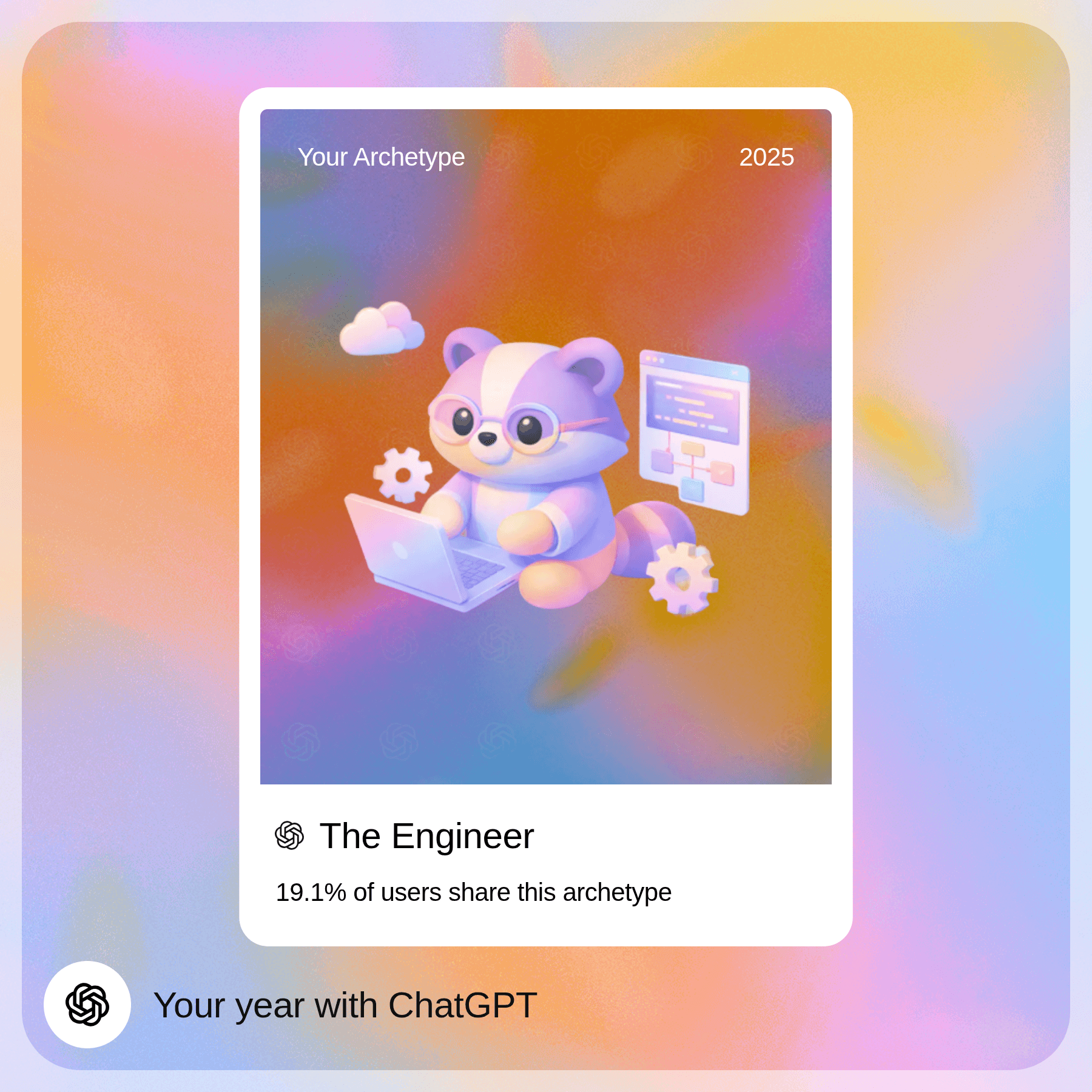
ChatGPT tagged my usage archetype as The Engineer, and honestly - that felt accurate.
I wasn’t using it for casual chit-chat or random prompts. Most of my conversations revolved around:
- Breaking down complex backend concepts
- Debugging Node.js, Express, and TypeScript issues
- Designing APIs and system flows
- Improving code structure and readability
- Thinking through real-world tradeoffs
The archetype fits because my usage was problem-driven, not curiosity-driven.
The Numbers That Surprised Me
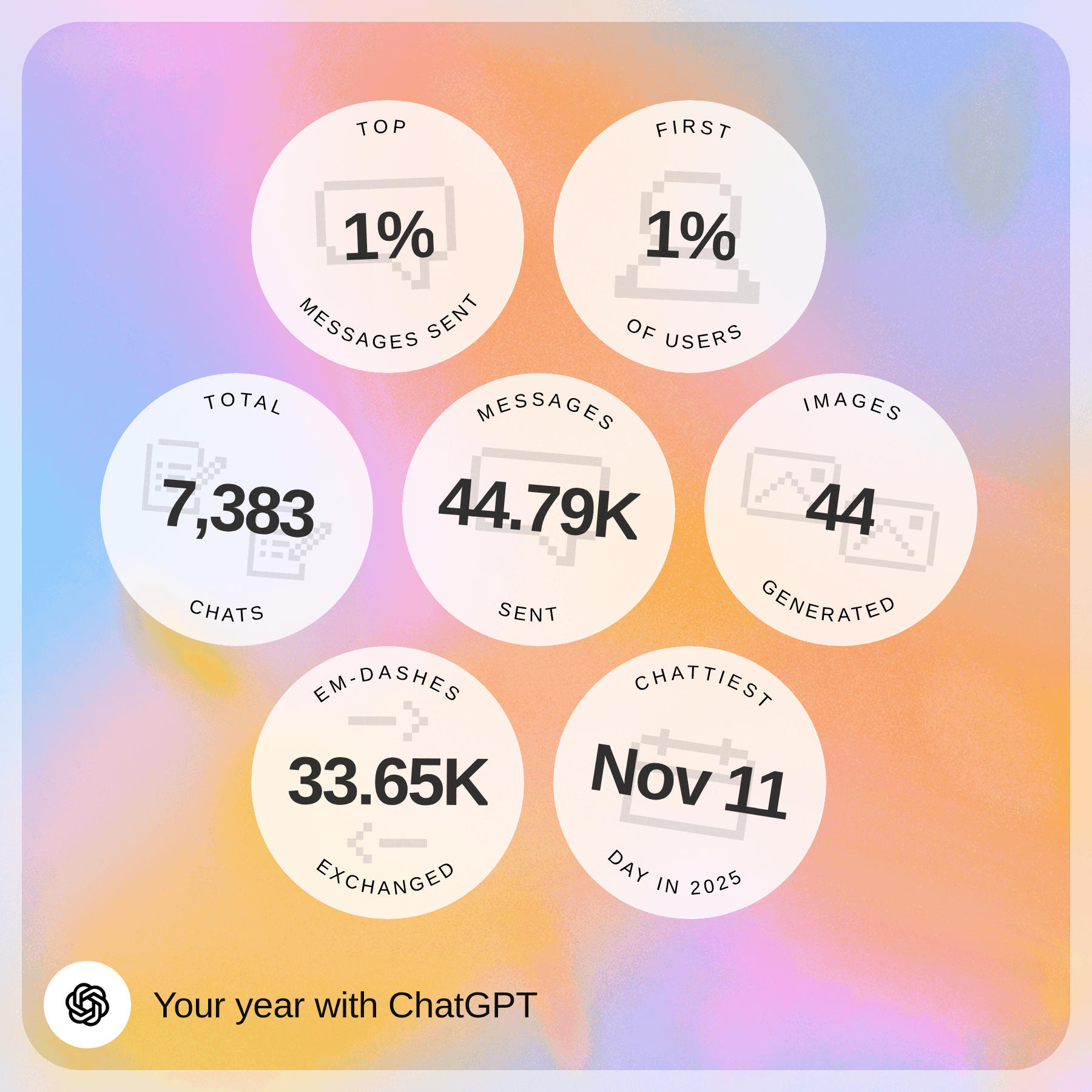
When I looked at my yearly stats, a few things stood out immediately:
- 7,383 chats
- 44.79K messages sent
- Top 1% of users by messages
- 33.65K em-dashes exchanged
- 44 images generated
- My chattiest day: Nov 11
These numbers aren’t about flexing - they reflect consistency.
I didn’t binge for a week and disappear.
I showed up almost every day with real problems, questions, frustrations, and ideas.
How ChatGPT Actually Helped Me
Learning Without Tutorial Hell
Instead of watching endless videos, I started asking very specific questions:
- Why does this middleware fail only in production?
- What’s the real difference between cache-aside and write-through?
- Is this controller too fat, or am I overthinking?
ChatGPT helped me shorten the feedback loop:
explain → try → fail → refine
That alone saved me hundreds of hours.
Debugging With Clarity (Not Guesswork)
One underrated benefit was structured thinking.
Even when ChatGPT didn’t give the exact fix, it helped me:
- Narrow down the problem
- Identify assumptions
- Ask better follow-up questions
- Stop random trial-and-error
Debugging felt less chaotic and more deliberate.
Turning Confusion Into Language
A big shift for me this year was articulating thoughts - especially for:
- Blog posts
- LinkedIn threads
- Project documentation
ChatGPT helped me convert messy mental models into clear explanations, without diluting technical depth.
That skill alone made me more confident as a developer.
The Visual Side of My Year
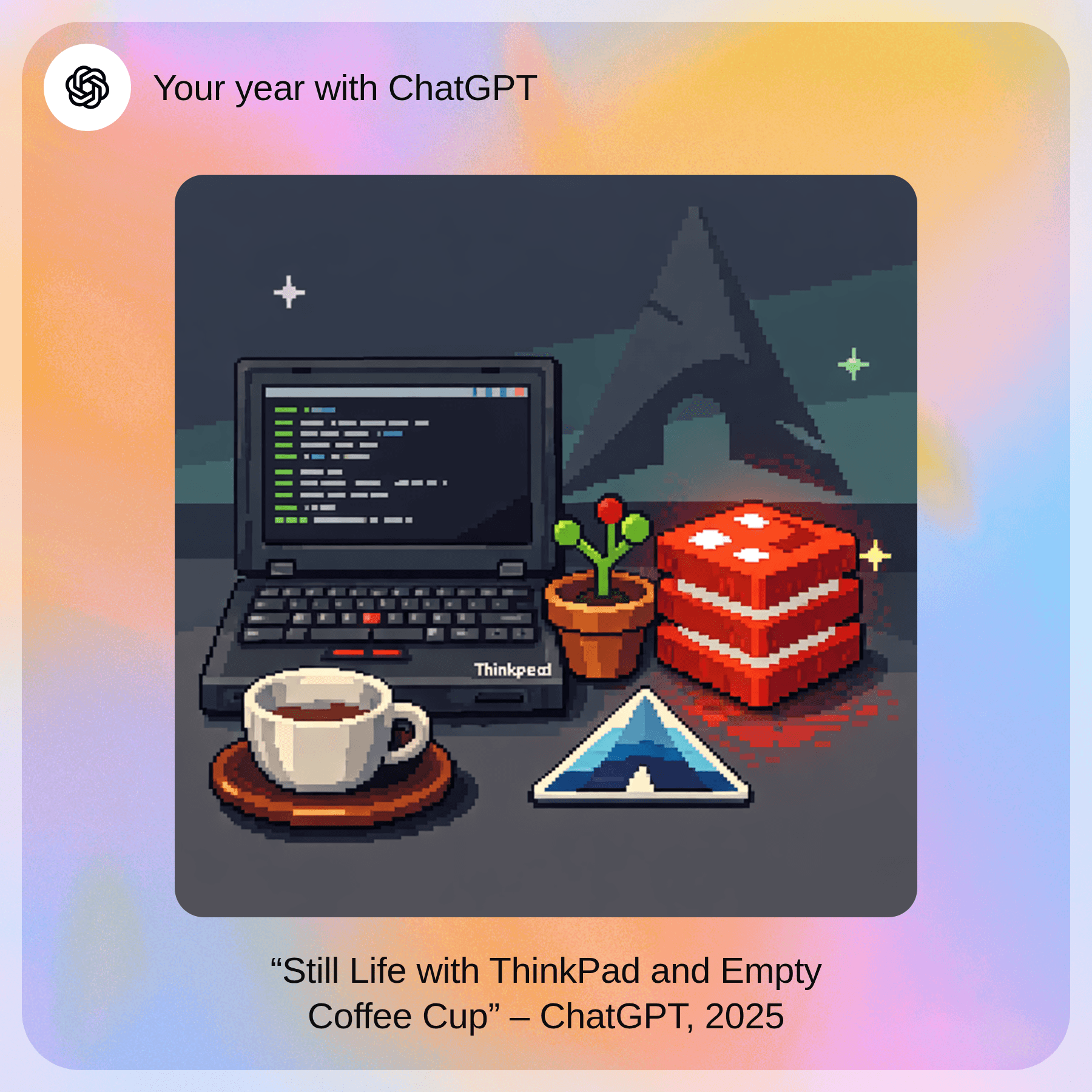
I didn’t generate images just for fun.
Whenever I did, it was to:
- Visualize ideas
- Create blog visuals
- Represent a developer’s daily life
- Add personality to technical content
This still-life image captures what most dev days actually look like:
No hype.
Just work, patience, and persistence.
What ChatGPT Did Not Do for Me
Let’s be clear - ChatGPT didn’t:
- Make me a better engineer automatically
- Replace hard thinking
- Eliminate frustration
I still had to:
- Read documentation
- Write bad code first
- Get stuck
- Sit with uncertainty
ChatGPT didn’t remove the grind - it made the grind smarter.
Why I’ll Keep Using ChatGPT
Because it works best when you already care about improvement.
- Ask shallow questions → get shallow answers
- Ask precise questions → gain leverage
For me, ChatGPT became:
- A mirror for my thinking
- A fast feedback system
- A companion during long learning stretches
Not magic.
Just useful - consistently.
Final Thoughts
2025 wasn’t about becoming a “10x developer”.
It was about:
- Thinking clearer
- Learning faster
- Building with more intention
ChatGPT didn’t give me success -
it helped me earn it more efficiently.
And that’s exactly what a good tool should do.